
A tortilla rarely looks like the main event of a meal. Once the ingredients inside goes in, the foldable wrap itself can be easy to overlook. The tortilla may be understated, but selecting one with an alternative nutritional profile can affect the overall meal.
For anyone comparing tortilla calories, the interesting question is about more than which wrap contains the least energy. It’s whether the tortilla offers the nutritional qualities, texture, and flexibility needed for the meals you actually eat.
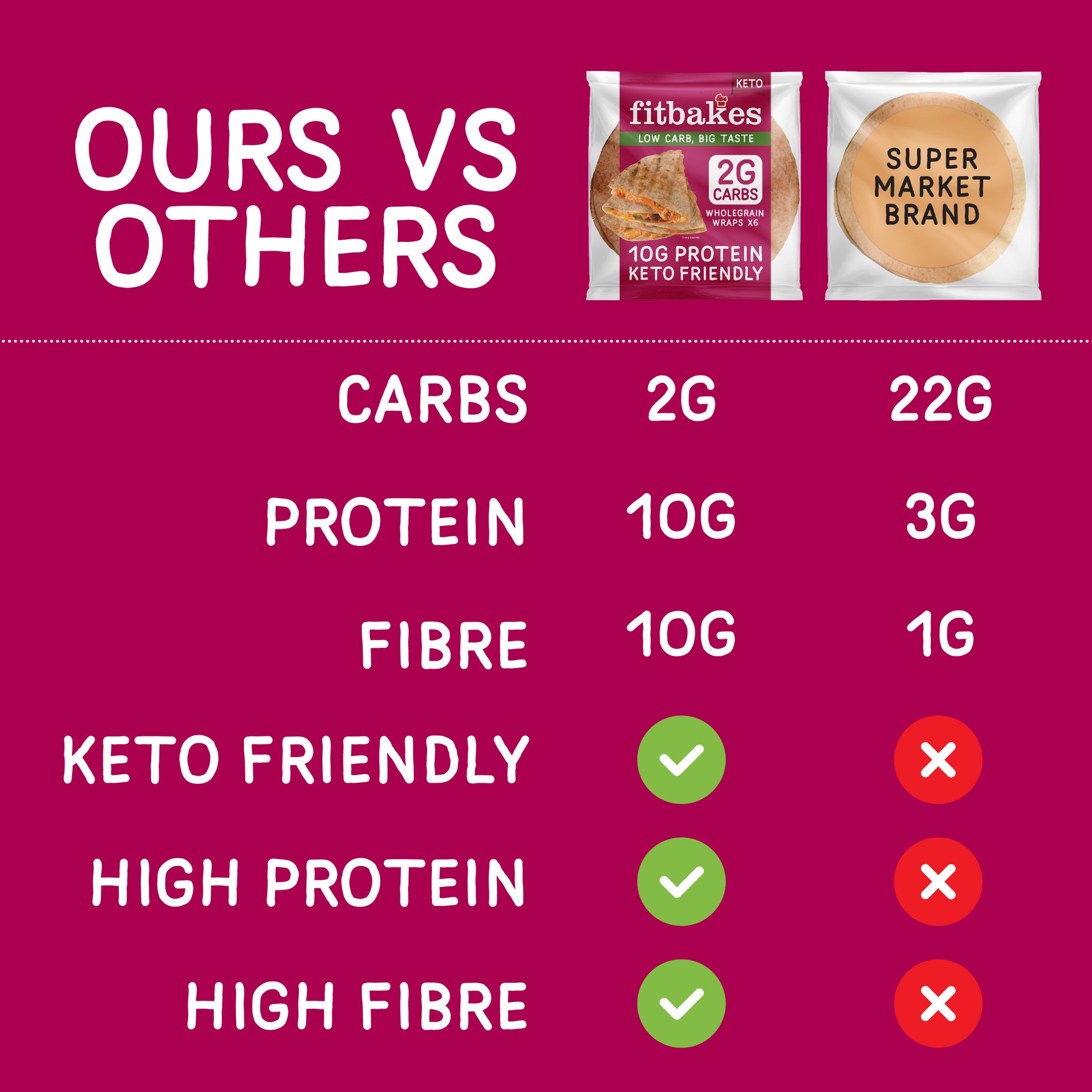
Image credit: fitbakes.co.uk
Comparing Wrap Calories: What the Figures Show
Results for “calories wrap tortilla” can show widely varying nutrition figures from one product to another. Mission reports approximately 186 calories for a Wholemeal Wrap and around 125 for a Carb Balance wrap, providing a useful comparison. The comparison uses the manufacturer’s stated nutrition values.
The gap between those figures shows why it is important to read each product label. Because wraps differ in weight and ingredients, you cannot judge their calorie content just by looking at them. A flatbread wrap with fewer carbohydrates does not automatically have the fewest calories.
What Happens When You Choose Another Wrap?
Think of a lunch made with grilled chicken, roasted peppers, salad leaves, and a small amount of yoghurt dressing. Keep the ingredients inside but choose a lower-carbohydrate wrap in place of the conventional one. You still have essentially the same lunch, although its nutrition figures is different.
Fitbakes Wholegrain Wraps are intended to let people keep using familiar fillings. The manufacturer reports just 2g carbohydrates, 10g protein, and 10g fibre per wrap.
These figures make the wrap or loaf relevant to people who are reducing carbohydrates while still enjoying bread-based meals. Check the full product nutrition label rather than assuming an exact calorie value.
Understanding Two Important Nutrients
Although packaging may group them together, protein and fibre do different jobs. Protein is an important nutrient for normal tissue repair and maintenance. Fibre supports digestive health and may be useful to a serving feel more satisfying. With Fitbakes reporting 10g of each per wrap, both are worth considering during a comparison of alternatives.
The rest of the wrap filling still matters when assessing the overall meal. Vegetables and a suitable protein source produce a different meal from a tortilla filled with rich dressings.
A Better Way to Serve Your Wrap
The way you cook a tortilla may change the finished lunch’s calorie total even if you keep the same tortilla. Toasting without oil avoids added cooking fat, while frying a tortilla in oil adds energy from the oil. For a more developed malty taste, Fitbakes suggests lightly toasting its wholegrain wraps for about 30 seconds.
A simple lunch could start with a warmed tortilla filled with cooked mushrooms, spinach, and a touch of cheese. Alternatively, use it as a thin flatbread topped with tomato, herbs, and roasted vegetables. These serving ideas keep preparation simple while giving you different ways to use the same wrap.
Why the Full Plate Matters
When comparing tortillas, you can become focused on the packaging label and miss the bigger picture.
The calorie count of a prepared meal also reflects dressings, cheese, spreads, and cooking fats. For anyone tracking calories, it makes more sense to count the entire dish than to focus on the tortilla alone.
The sandwich filling’s carbohydrate contribution matters too if you are monitoring carbohydrate intake. Considering both the wrap and its filling provides better context for your food choices.
Choose a tortilla for the Way You Eat
A useful calories wrap tortilla should work with your favourite recipes, suit your nutritional priorities, and be enjoyable enough to use regularly. Fitbakes Wholegrain Wraps provide a plant-based, carb-conscious alternative with manufacturer-reported protein and fibre content.
An informed choice starts with reviewing allergen information and ingredients, serving size, and the detailed nutritional label. The most practical choice isn’t necessarily the tortilla itself with the fewest calories on its packaging. A better choice is a tortilla that makes it easier to put together meals suited to your routine.