
Processing a single document is not a huge task. Even manual entry might seem easy when only one PDF is involved.
Multiply this task with many companies, numerous account numbers and multiple statement times.
The issue has evolved. Once, it was a simple job for a clerical worker, but now it’s a lengthy process that consumes the time of employees and increases the chances of unreliable data entry. The improvement in bank statement conversion does not only mean that you can make one document faster. It’s important to develop the process that can be used even when the amount of documents grows.
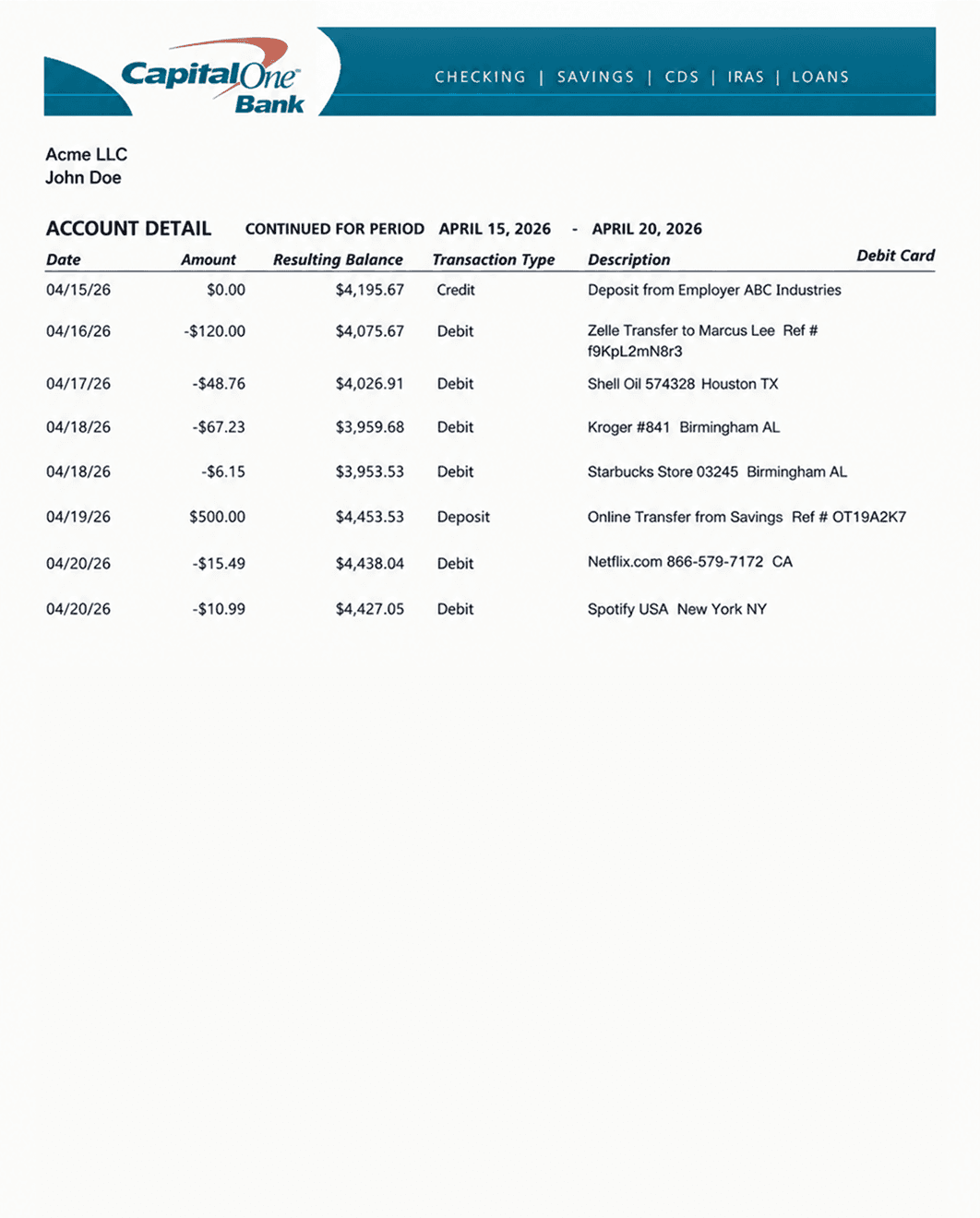
Image credit: docubrew.com
The bottleneck is repetition
Imagine that an accounting company receives monthly PDFs from several clients. One client has Chase while the other uses Wells Fargo. Others send statements from Bank of America or Capital One.
Access each PDF file and manually enter every transaction manually.
A converter for bank statements will shift the workflow away from the transcription process and instead towards reviewing. Docubrew uses the actual statement to find transaction numbers instead of estimating value. It creates structured files that can be inspected prior to use. This distinction is becoming more valuable as the volume of documents increases.
Batch processing transforms the equation
In the case of occasional conversions for occasional conversions, it is feasible to handle files individually. Accounting firms often face a different reality. Docubrew lets you create and manage multiple accounts in a single session. Results are available on a separate basis. So, a company can go through a large collection of client documents without building each transaction table.
If the accounting workflow calls for CSV files, the user can convert the bank statement to CSV prior to moving forward.
Scanned paper statement aren’t automatically excluded. Docubrew offers OCR for scanned pdfs. This can be helpful for clients who have both native PDFs as well as scans in their historical records.
Create output to help with the accounting work that is ahead
The process does not end with the conversion. A majority of transactions have to be processed.
Docubrew exports CSV, Excel, and QBO. If you’re in a group that requires to transfer a bank statement to Quickbooks, QBO provides an alternative to output, in addition to the more common spreadsheet formats.
Firms that regularly convert bank statements to Quickbooks can build a more consistent process around receiving statements, processing them, checking the extracted data, and preparing the appropriate files for the accounting workflow.
Human-based review is still essential. Automating repetitive transcription can be achieved, but bookkeepers are still responsible for reviewing financial data and finishing accounting work.
Client Data Should Be a Part of Its Own Workflow This is a crucial decision
The increased volume of documents also means handling more sensitive client data.
Docubrew uses two methods of processing. Windows desktop applications perform conversions locally. Files can remain on the computer. Cloud options use encrypted uploads, and Docubrew declares that uploaded and converted files are deleted immediately after 24 hours.
Accounting practices can select the best approach for their internal handling needs.
Scale Processes and Not Repetitive Work
A growing bookkeeping practice should anticipate more financial records. This shouldn’t be the case of requiring more copy and paste work.
The question to ask is whether the method that was successful for five clients will still be effective for 50 clients.
By standardizedizing the process of receiving, converting, reviewing, and preparing statements for accounting software, businesses can establish workflows that can be used for periodic amounts rather than treating every new PDF like a manual task.